4 hr
Grand Teton National Park Wildlife Safari
Search for bears, wolves, moose, and eagles on a guided 4-hour safari through Grand Teton.
Reserve
Hand-picked by our editors — only the best 5 photography-focused excursions from 140 reviewed.
Verified partners for every tour, free cancellation where available, and instant confirmation on every booking.
4 hr
Search for bears, wolves, moose, and eagles on a guided 4-hour safari through Grand Teton.
Reserve
4 hr
Half-day morning tour into Grand Teton National Park with wildlife spotting and pickup included.
Reserve
3 hr 30 min
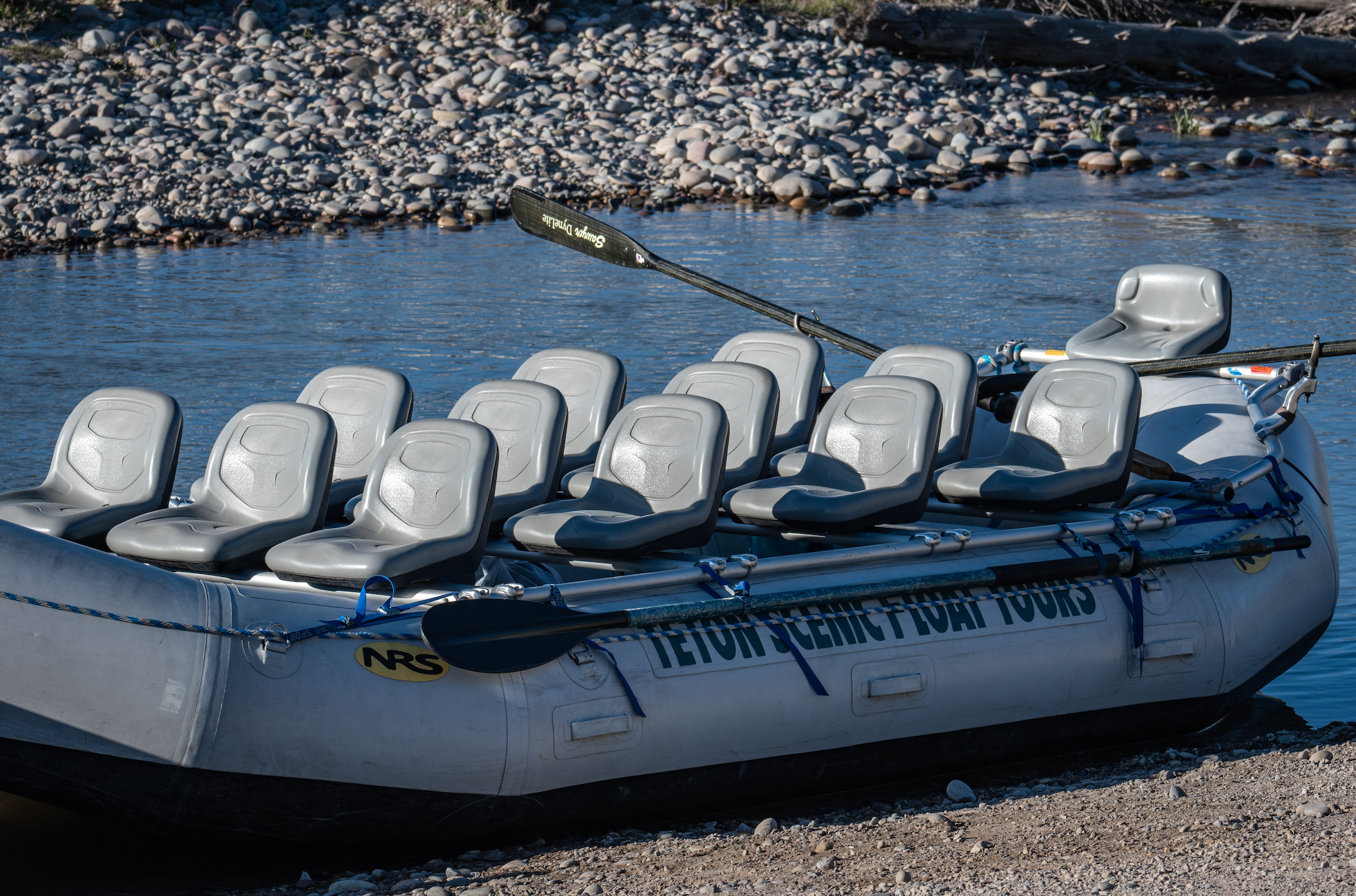
Float 13 miles down the Snake River in a chaired raft, spotting eagles, moose, and Teton views.
ReservePrices from verified partners. Availability updates in real time at checkout. Free cancellation policies apply where shown.
The landmarks, rooms, and views travelers on this tour remember — all visible on a single visit.
Known for its crystalline water and mountain backdrop, this lake is a primary hub for photographers. It features a deep glacial basin reaching 423 feet.
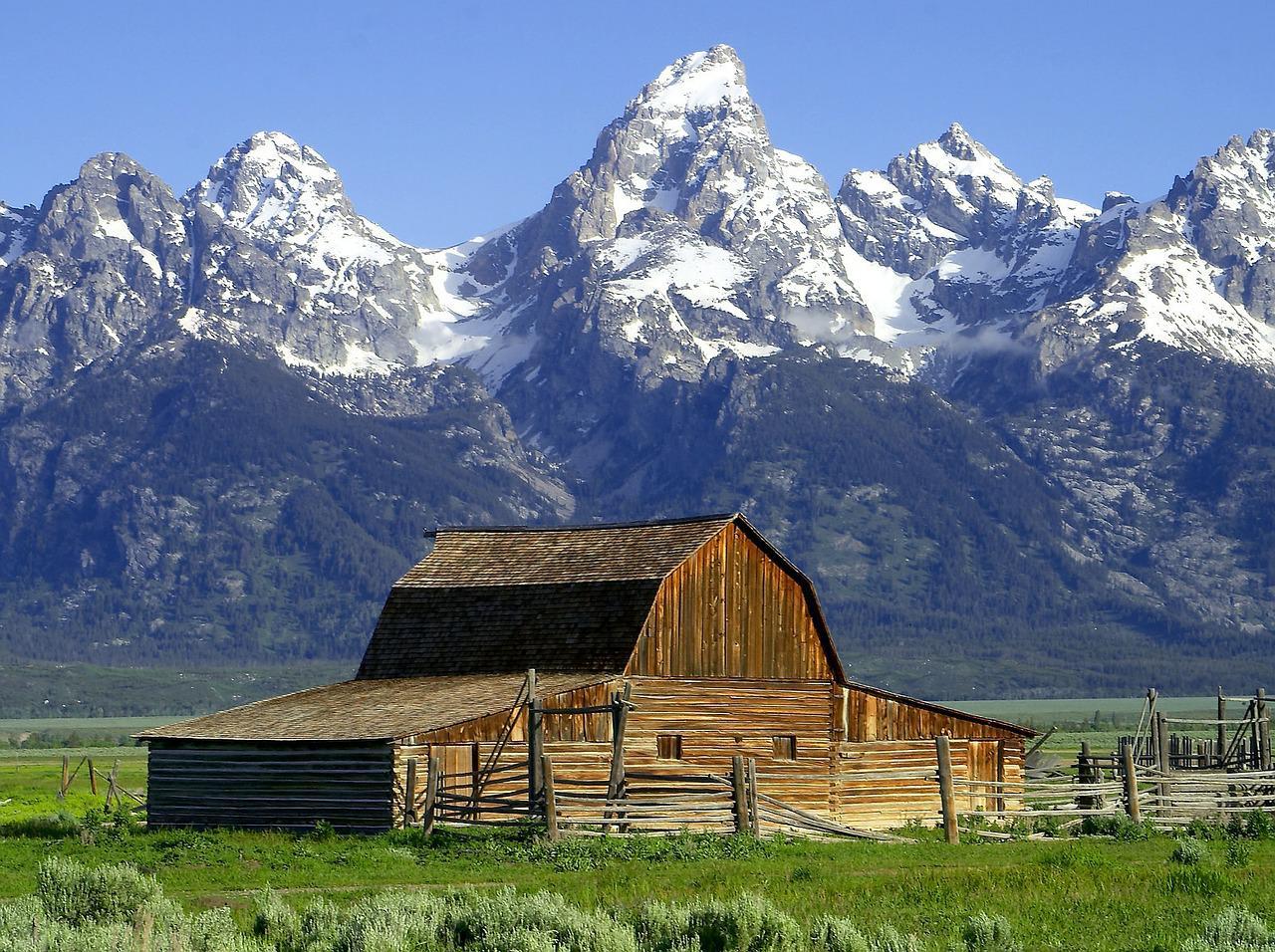
This historic site contains the iconic T.A. Moulton Barn. It remains one of the most photographed structures in the park since its homesteading days.
This peak offers an elevation of 7,720 feet and views of the valley floor. It provides a vantage point for viewing bison and elk herds.
This winding river provides essential riparian habitat for bald eagles and moose. It spans across the valley with the peaks as a backdrop.
A famous turn in the river that offers stunning reflections of Mount Moran. It is a prime location for sighting birds of prey.
They complement each other; most visitors who do both call the guided grand teton wildlife photography tour more efficient for spotting elusive species. Those who prefer total autonomy find the self-guided approach ideal for personal pacing.
| Feature | Top pick Guided Tour | Self-Guided Safari |
|---|---|---|
Expertise provided |
Professional photographer guide | None |
Flexibility |
Fixed itinerary | Complete freedom |
Cost efficiency |
135 USD plus tour fee | 35 USD vehicle pass |
Equipment access |
Rental telephoto lenses included | Personal gear only |
Knowledge of animal locations |
Real-time radio tracking | Manual searching |
Group size |
Limited small groups | Private or family vehicle |
| See tickets → |
Verdict: Securing grand teton wildlife photography tour tickets provides technical support and local insight, while a self-guided trip offers a budget-friendly way to explore the valley at your own pace.
Choose your ticket, select your date, and reserve in under two minutes. Secure checkout handled by our verified partner.
Instant confirmation by email, with a mobile voucher you can save offline. No printing, no queuing at a collection desk.
Arrive at the entrance, show your voucher on your phone, and walk in. Most tickets include priority or skip-the-line access.
Practical details for your visit straight from our verified partners — hours, access, rules, and how to get there.
Grand Teton National Park, Moose, WY 83012, USA
Primary meeting point for guests.
Rental vehicle is the primary mode of travel. Parking is available at major trailheads.
Wear layers suitable for high-altitude mountain environments. A grand teton wildlife photography tour requires sturdy walking boots for uneven terrain.
Keep gear bags compact for easy transport in tour vehicles. You are responsible for all personal equipment throughout your grand teton wildlife photography tour.
Tripods are permitted at most stops during a grand teton wildlife photography tour. Respect wildlife by maintaining the required 100-yard distance from bears and wolves.
Some viewing locations on a grand teton wildlife photography tour involve unpaved paths. Notify your operator in advance if mobility assistance is required.
Cellular service is limited across the park. Use offline maps during your grand teton wildlife photography tour to navigate remote areas.
A grand teton wildlife photography tour is suitable for older children interested in nature. Maintain quiet volumes to ensure optimal animal spotting conditions.
Bring sufficient water and snacks for your excursion. Food storage lockers are available at various trailheads within Grand Teton National Park.
Pets are prohibited on park trails. Arrangements must be made for animal boarding while participating in a grand teton wildlife photography tour.
Guides provide professional insight into the local ecology. Book your grand teton wildlife photography tour in advance as slots fill quickly during peak season.
Grand Teton National Park, Moose, WY 83012, USA
Primary meeting point for guests.
Get directionsBest time to go, insider tips, nearby landmarks, and the cancellation fine print — flip through to skim what matters to you.
How crowds, weather, and events shift across the year.
Expect long daylight hours and high wildlife activity. Temperatures range from 40 to 80 degrees Fahrenheit.
Small details that turn a good visit into a great one.
Aim for the 05:00–08:00 window for best light. This avoids mid-day harsh shadows on the peaks.
Non-bookable sights within a short walk — free to visit, easy to pair.
Features iconic mountain reflections and trails.
Flexible, no hidden fees.
All bookings for a grand teton wildlife photography tour are subject to operator-specific terms. Please review your confirmation for refund eligibility regarding the 135 USD entrance fee and tour service charges.
Hand-picked options within walking distance — pick a district for vibe, or a specific hotel for convenience.
Central park lodge with mountain views.
The Teton Range has no foothills. The fault beneath Jackson Hole dropped the valley floor while the peaks rose, so the wall of granite and gneiss climbs 2,100 metres straight out of the sagebrush with nothing to soften the transition. Grand Teton itself reaches 4,199 metres. The rock at its summit is roughly 2.7 billion years old, among the oldest exposed stone in North America, while the fault that lifted it has been active for less than ten million years. Ancient material, recent architecture. Congress established the original park in 1929, protecting only the peaks and the glacial lakes at their base. The valley floor remained in private hands. John D. Rockefeller Jr., travelling through in 1926, began quietly buying ranchland through the Snake River Land Company and eventually transferred more than 13,000 hectares to federal ownership. The expanded park was consolidated in 1950 after two decades of local opposition. That contested valley floor is precisely what makes a grand teton wildlife photography tour possible today — the unfenced flats where elk winter and pronghorn complete the longest land migration in the lower forty-eight. The ecological argument for the place is stronger than the scenic one. Grand Teton anchors the southern reach of the Greater Yellowstone Ecosystem, one of the last largely intact temperate ecosystems on the planet. Grizzly and black bears, grey wolves, moose, bison, bighorn sheep and river otters all occupy the same drainage. Bear 399, the most photographed grizzly in the world, raised successive litters within sight of the Pilgrim Creek road until her death in 2023. Sightings here are not staged; they are a function of intact habitat and patient timing. The landscape reads differently by elevation. Cottonwood galleries line the braided Snake River, where moose feed at first light. Above them, glacial moraines hold Jenny Lake and String Lake in bowls of till left by ice that retreated some 15,000 years ago. Higher still, Teton Glacier survives on the northeast face, shrinking measurably each decade. Mormon Row's weathered barns, homesteaded in the 1890s, frame the range from the valley's eastern edge and remain among the most reproduced structures in American landscape photography. Operators running a grand teton wildlife photography tour tour work within this geography rather than against it, following the animals across the 130,000-hectare park along the Snake River corridor, Antelope Flats and the Moose-Wilson road.
"Ancient material, recent architecture — the summit rock predates the mountain that carries it by billions of years."
A step-by-step walkthrough of the visit — what you'll see, how long each stage takes, and the details that matter.
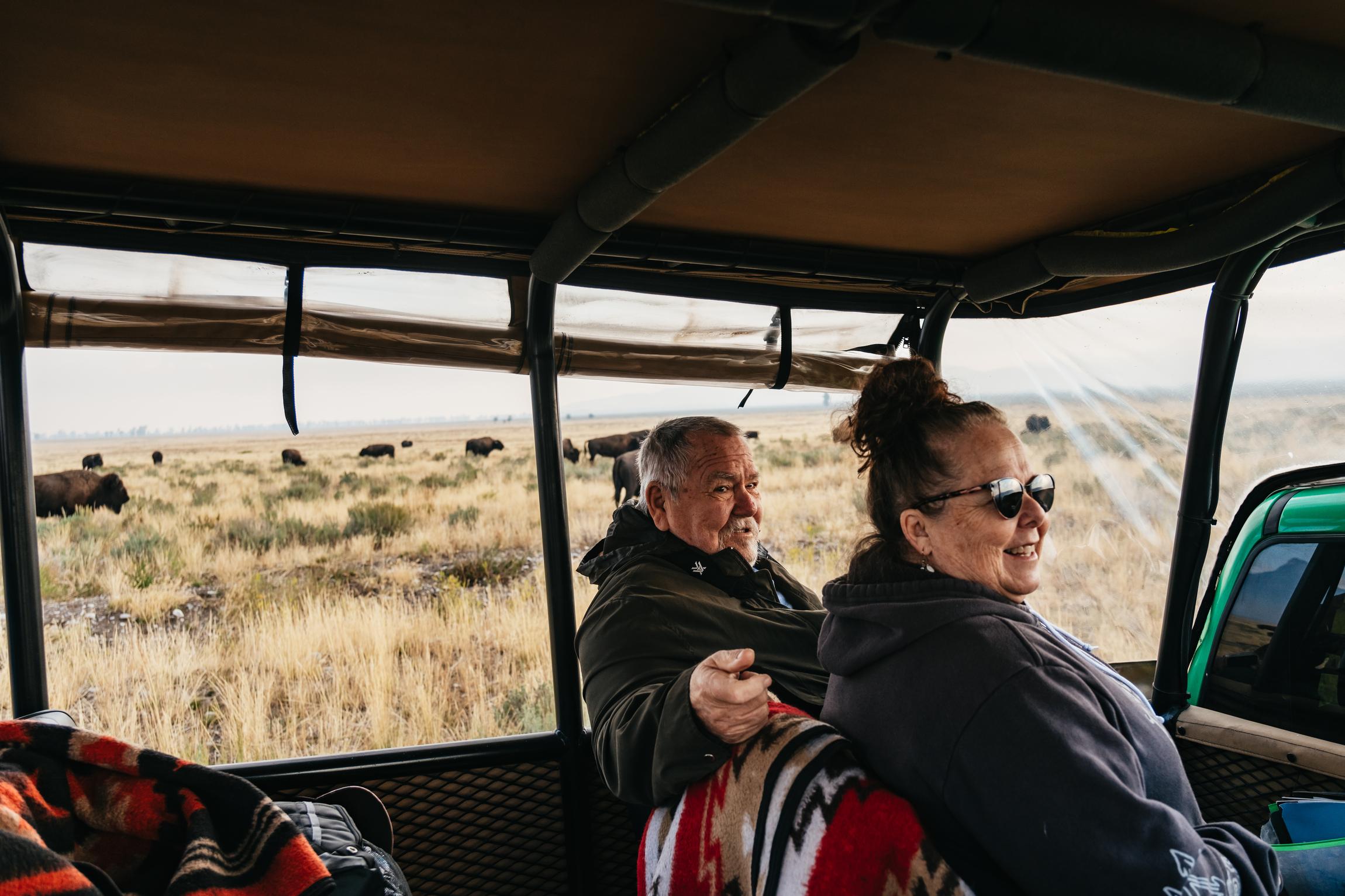
You meet your guide in the dark. The best arrival window runs 05:00–08:00, when lighting and animal movement align, so a sunrise safari collects you from Jackson while the valley is still blue. You climb into a small vehicle, take a window seat, and watch the eastern rim of the Gros Ventre range go pink before the Tetons do. Your guide stops first where the sage opens out. Spotting scopes come off the roof rack. You brace a long lens against the door frame and wait — bison move in loose columns, a coyote crosses the frozen two-track, and if the morning cooperates, a bull moose stands chest-deep in willow. Sightings are never guaranteed. Patience is the whole method. By mid-morning the light hardens and the animals bed down. This is when a Snake River scenic float earns its place on a grand teton wildlife photography tour: you settle into a chair on a raft, drift past cottonwood banks at walking pace, and shoot bald eagles, osprey nests and beaver sign from water level, with the range filling the frame behind you. The half-day option from Jackson instead turns north through Antelope Flats toward Mormon Row. You return to town with a card full of frames, cold hands, and a reason to be up before five again tomorrow.
The best arrival window is 05:00–08:00 to catch optimal lighting and wildlife activity. This timing is essential for a productive session.
Pricing varies by provider; check the live booking grid for current grand teton wildlife photography tour tickets.
Yes, families are welcome, provided children can remain quiet. Always check with your specific operator for age restrictions.
Bring a telephoto lens, extra memory cards, and layers. Being prepared ensures you maximize your grand teton wildlife photography tour experience.
Yes, visitors must pay a 135 USD entrance fee, which includes a 35 USD vehicle pass and 100 USD non-US resident fee per person.
No, drones are strictly prohibited within Grand Teton National Park. Ensure your gear adheres to all park rules during your grand teton wildlife photography tour.
Book directly through our inventory of providers. Reservations are highly recommended for every grand teton wildlife photography tour.
Many stops are accessible, though some terrain is uneven. Contact your operator regarding specific accessibility needs for your grand teton wildlife photography tour.
Tours often proceed in varied weather as wildlife may be active. Review the cancellation policy provided with your grand teton wildlife photography tour tickets.