Grand Teton Wildlife Tours
Tours & tickets

Hand-picked by our editors — only the best 5 wildlife safaris from 40 reviewed.

Open today 00:00–23:59
Attendance: Moderate — summer season
Check for wildlife closures before starting your grand teton wildlife tour winter excursion.
Free cancellation Instant confirmation Mobile voucher Verified partner Book now, pay later
Tickets

Choose your ticket

Verified partners for every tour, free cancellation where available, and instant confirmation on every booking.

Grand Teton National Park Half-Day Morning Tour 4 hr
Standard Entry

Grand Teton National Park Half-Day Morning Tour

4.8 (413)
€129
per person
Instant Mobile voucher Flexible — change up to 24h

Half-day wildlife and scenery tour of Grand Teton National Park, departing from Jackson.

Reserve
Grand Teton Wildlife Safari & Sightseeing Tour 4 hr
Standard Entry

Grand Teton Wildlife Safari & Sightseeing Tour

4.6 (33)
€125
per person
Instant Mobile voucher Flexible — change up to 24h

Half-day guided safari through Grand Teton's iconic landscapes and prime wildlife habitat.

Reserve

Prices from verified partners. Availability updates in real time at checkout. Free cancellation policies apply where shown.

What you'll do

Inside a tour, step by step

  1. 01 3h

    Wildlife Spotting

    Observe elk and bighorn sheep in the valley

Highlights

What you'll see inside the attraction

The landmarks, rooms, and views travelers on this tour remember — all visible on a single visit.

National Elk Refuge

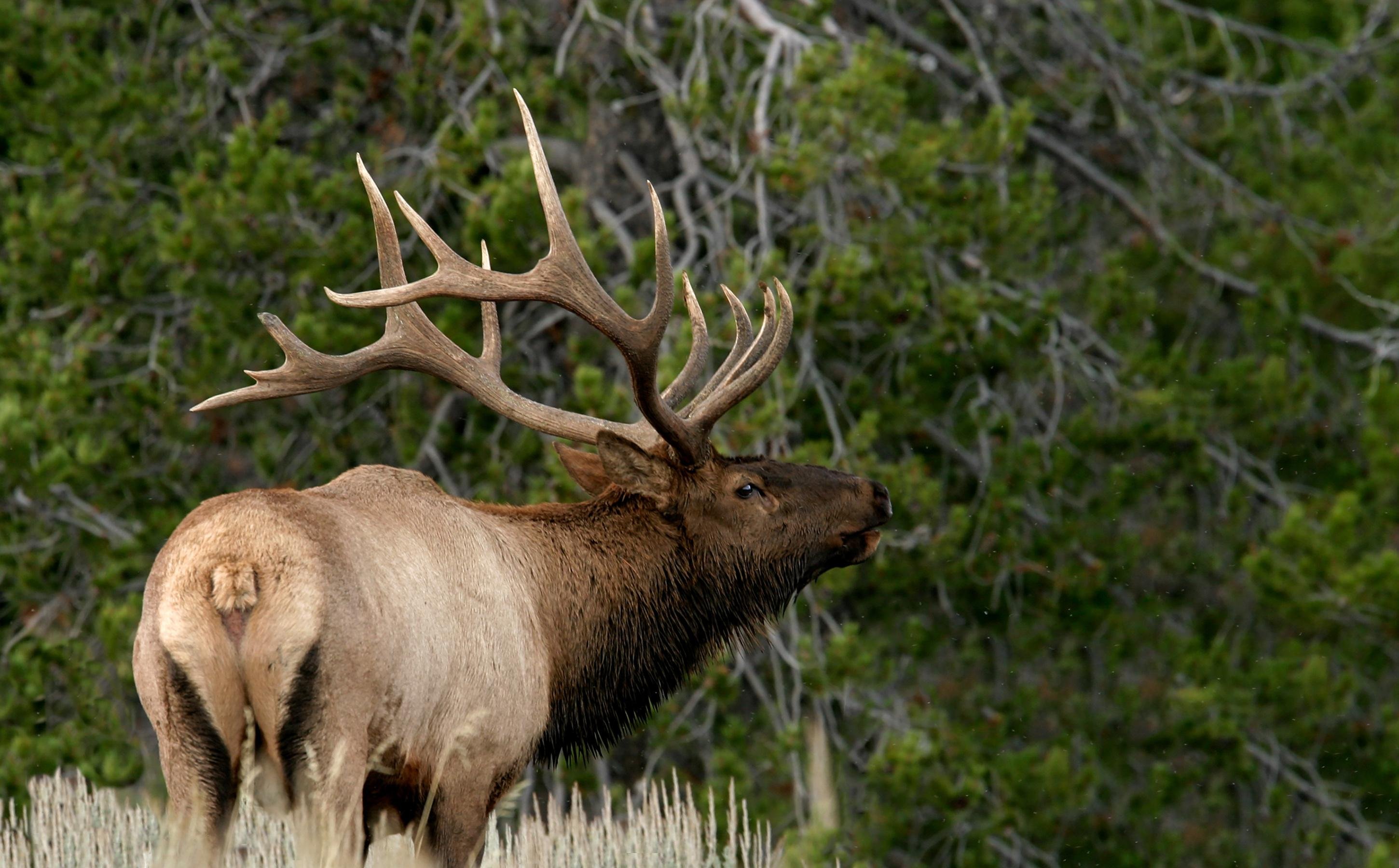
Home to thousands of elk and bighorn sheep that descend for winter.

Antelope Flats

Open sagebrush habitat where bison and pronghorn are often spotted.

Miller Butte

A prime location for viewing bighorn sheep during the winter months.

Snake River

Features diverse waterfowl and occasional moose near the frozen banks.

Head to head

Guided Grand Teton Wildlife Tour Winter vs Self-Driving Your Own Vehicle

Professional guides provide superior spotting success and safety in harsh conditions, while self-driving offers unmatched personal freedom for experienced winter motorists.

Feature Top pick Guided Winter Tour Self-Driving
Navigational expertise
Self-reliant navigation
Vehicle safety/comfort
Driver dependent on own vehicle
Wildlife spotting success
Variable based on experience
Educational value
Information gained via personal research
Flexibility/Autonomy
Full control over schedule
Cost considerations
35 USD vehicle pass (7 days)

Verdict: Those seeking the most comprehensive educational experience should choose a grand teton wildlife tour winter tour, whereas visitors who prioritize total independence may prefer booking grand teton wildlife tour winter tickets to enhance their self-driving trip with professional insights, as these grand teton wildlife tour winter tours maximize safety in deep snow.

How your ticket works

Book your ticket in 3 steps

  1. 01

    Book online

    Choose your ticket, select your date, and reserve in under two minutes. Secure checkout handled by our verified partner.

  2. 02

    Receive your mobile voucher

    Instant confirmation by email, with a mobile voucher you can save offline. No printing, no queuing at a collection desk.

  3. 03

    Show & enter

    Arrive at the entrance, show your voucher on your phone, and walk in. Most tickets include priority or skip-the-line access.

Plan your visit

Everything you need to know before you go

Practical details for your visit straight from our verified partners — hours, access, rules, and how to get there.

Open today · 00:00–23:59
Operating Hours
00:00–23:59
Address
Grand Teton National Park, Moose, WY 83012
Accessibility
Varies by site and snow depth
Best Arrival
06:00–09:00
Storage
Not available in park
Mon
00:00–23:59
Tue
00:00–23:59
Wed
00:00–23:59
Thu
00:00–23:59
Fri
00:00–23:59
Sat
00:00–23:59
Sun
00:00–23:59
Closed on: Nov 1 (Seasonal road closure), Apr 30 (Seasonal road reopening)
Main entrance

Craig Thomas Discovery & Visitor Center

Moose, WY 83012

Primary hub for winter information

Address
Grand Teton National Park, Moose, WY 83012
Storage
Not available in park

How to get there

🚗
Car · 45 min · Free with park pass

Follow US-191/89 from Jackson; expect icy conditions

Dress code

Dress in warm, moisture-wicking layers suitable for sub-zero temperatures during your grand teton wildlife tour winter. Waterproof boots, gloves, and hats are essential for outdoor exposure.

Bags & security

Keep all personal belongings secured. Be prepared for remote conditions with limited cell service during a grand teton wildlife tour winter.

Photography

Bring a telephoto lens to capture wildlife from a safe, respectful distance. Follow all park guidelines regarding proximity to animals during your grand teton wildlife tour winter.

Accessibility

Winter access in Grand Teton National Park is limited due to snow. Certain areas may be inaccessible for those with mobility challenges during a grand teton wildlife tour winter.

What to bring

  • Binoculars
  • Spotting scope
  • Insulated layers
  • Warm boots
  • Sunscreen
  • Sunglasses
  • Camera

Not allowed

  • Drones
  • Off-trail motorized vehicles
  • Unsecured food storage
  • Weapons
  • Hunting gear
  • Pets on backcountry trails
  • Alcohol in restricted areas
  • Litter

Families & strollers

Children should be closely supervised near frozen water bodies and snow-covered terrain. Prepare for cold weather gear requirements for younger travelers on a grand teton wildlife tour winter.

Food & drink

Carry sufficient water and high-energy snacks, as park services are significantly reduced. Hydration is critical in the dry, high-altitude winter air.

Meeting point

Where to find us

Craig Thomas Discovery & Visitor Center

Moose, WY 83012

Primary hub for winter information

Get directions
Around your visit

Everything else worth knowing

Best time to go, insider tips, nearby landmarks, and the cancellation fine print — flip through to skim what matters to you.

Best time to visit

How crowds, weather, and events shift across the year.

January

Quiet atmosphere with deep snowpack for snowshoeing tours.

February

High activity for bighorn sheep on Miller Butte.

March

Increasing daylight hours for extended wildlife observation.

December

Early season grooming begins for winter recreation.

Helpful tips for your visit

Small details that turn a good visit into a great one.

Wildlife viewing

Focus on the National Elk Refuge and Antelope Flats for winter activity.

Stay quiet

Minimize noise to avoid disturbing wildlife during your grand teton wildlife tour winter.

Layer up

Check weather forecasts as temperatures drop significantly below freezing.

Check closures

Verify if Teton Park Road is accessible before starting a grand teton wildlife tour winter.

Safety

Keep distance from large mammals; use binoculars for close-ups.

Nearby landmarks

Non-bookable sights within a short walk — free to visit, easy to pair.

National Elk Refuge

20 min

Renowned for thousands of wintering elk and sleigh rides.

Cancellation policy

Flexible, no hidden fees.

Entry fees are non-refundable. Check specific tour operator terms for your grand teton wildlife tour winter tickets.

Where to stay

Hotels & districts near the attraction

Hand-picked options within walking distance — pick a district for vibe, or a specific hotel for convenience.

Teton Mountain Lodge & Spa

45 min
Luxury

Upscale lodging near Jackson Hole resort.

About

The place, in context

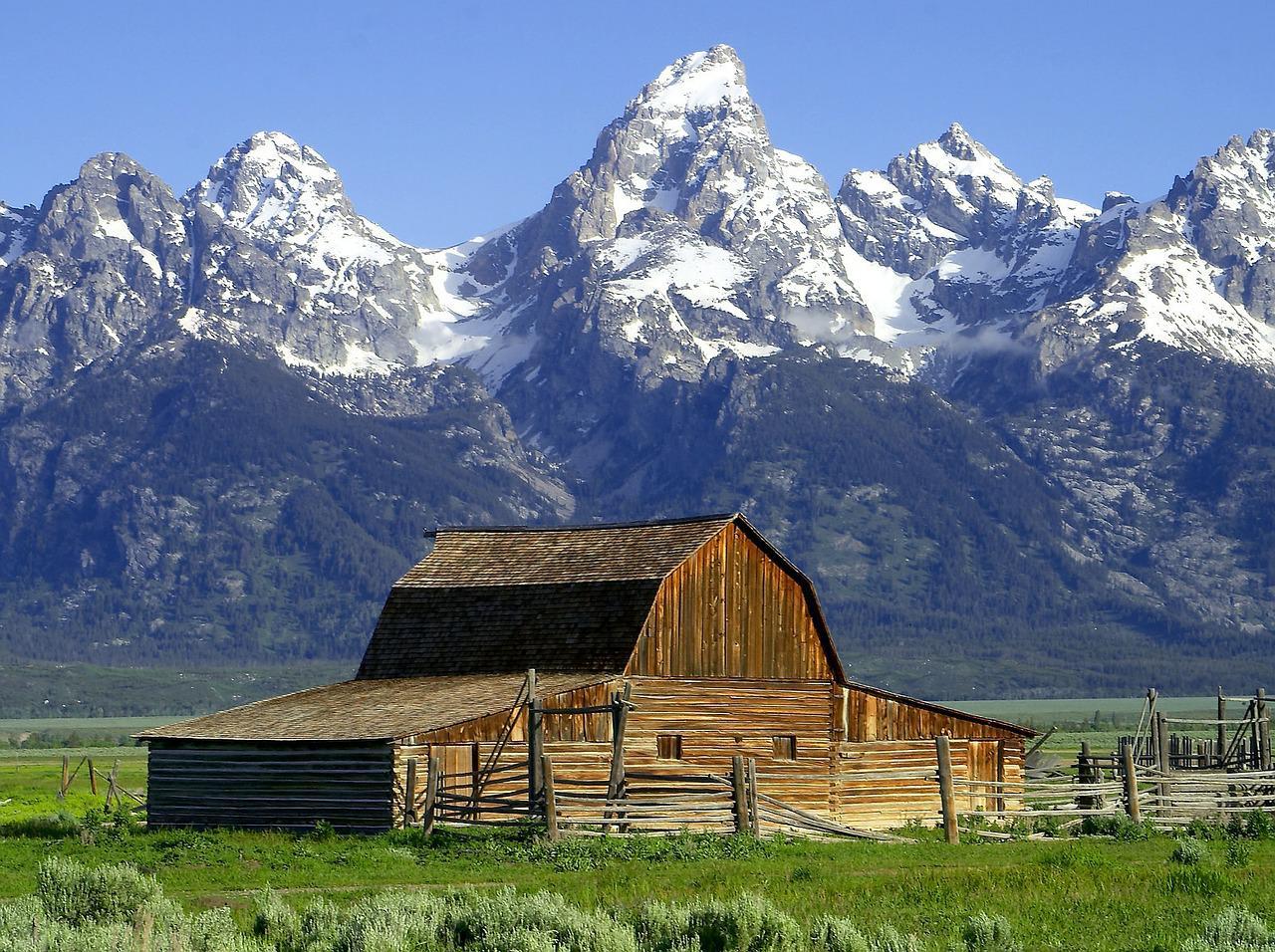
Grand Teton National Park loses roughly ninety percent of its visitors between December and March, and gains its best animal viewing in the same months. The arithmetic is simple. Snow closes the high country. Elk, bison, moose, bighorn sheep and pronghorn drop to the valley floor, where sagebrush flats and river bottoms hold forage within reach. A grand teton wildlife tour winter itinerary works because the animals have concentrated themselves. The park was established in 1929, covering only the Teton Range and six glacial lakes at its base. John D. Rockefeller Jr. spent two decades quietly buying valley ranchland through the Snake River Land Company; that acreage joined the park in 1950, and the expansion is why the flats of Antelope Flats and Elk Ranch now lie inside the boundary. Those flats are the winter stage. Immediately south sits the National Elk Refuge, created in 1912, where five to eight thousand elk overwinter within sight of the town of Jackson. The range itself is young and abrupt. The Teton fault has lifted the block roughly 7,000 feet above the valley floor with no foothills to soften the transition, and Grand Teton peaks at 13,775 feet. The Snake River cuts a braided corridor beneath it, its cottonwood galleries a reliable winter haunt for moose. Bald eagles and trumpeter swans hold open water where springs keep the current from freezing. Wildlife management here has an unusual history. Wolves returned to the Greater Yellowstone Ecosystem in 1995 and reached the Teton valley within a few years, restoring a predator dynamic that had been absent since the 1920s. Winter is when their work is most visible: tracks in fresh snow, ravens circling a carcass on an open bench. Guides on a grand teton wildlife tour winter route read those signs rather than chase sightings. The cultural layer is thinner but persistent. Mormon Row, homesteaded from 1896, still holds the Moulton barns, photographed against the range more than almost any structure in the American West. Menor's Ferry at Moose, operating from 1894, marked the only reliable Snake River crossing for decades. In deep snow these buildings read as they were built to read: small, low, braced against wind. What gives the park its standing today is continuity of habitat rather than spectacle. It forms the southern anchor of an ecosystem of some 22 million acres, one of the last in the temperate world holding its full complement of large mammals. Pronghorn still run a 150-mile migration corridor south to the Green River Basin, a route in use for roughly 6,000 years. Winter compresses all of this into a narrow, legible band along the valley floor, which is precisely why the season rewards patient observation.
"Winter does not empty the valley — it concentrates it."
Your experience

What a tour day looks like

A step-by-step walkthrough of the visit — what you'll see, how long each stage takes, and the details that matter.

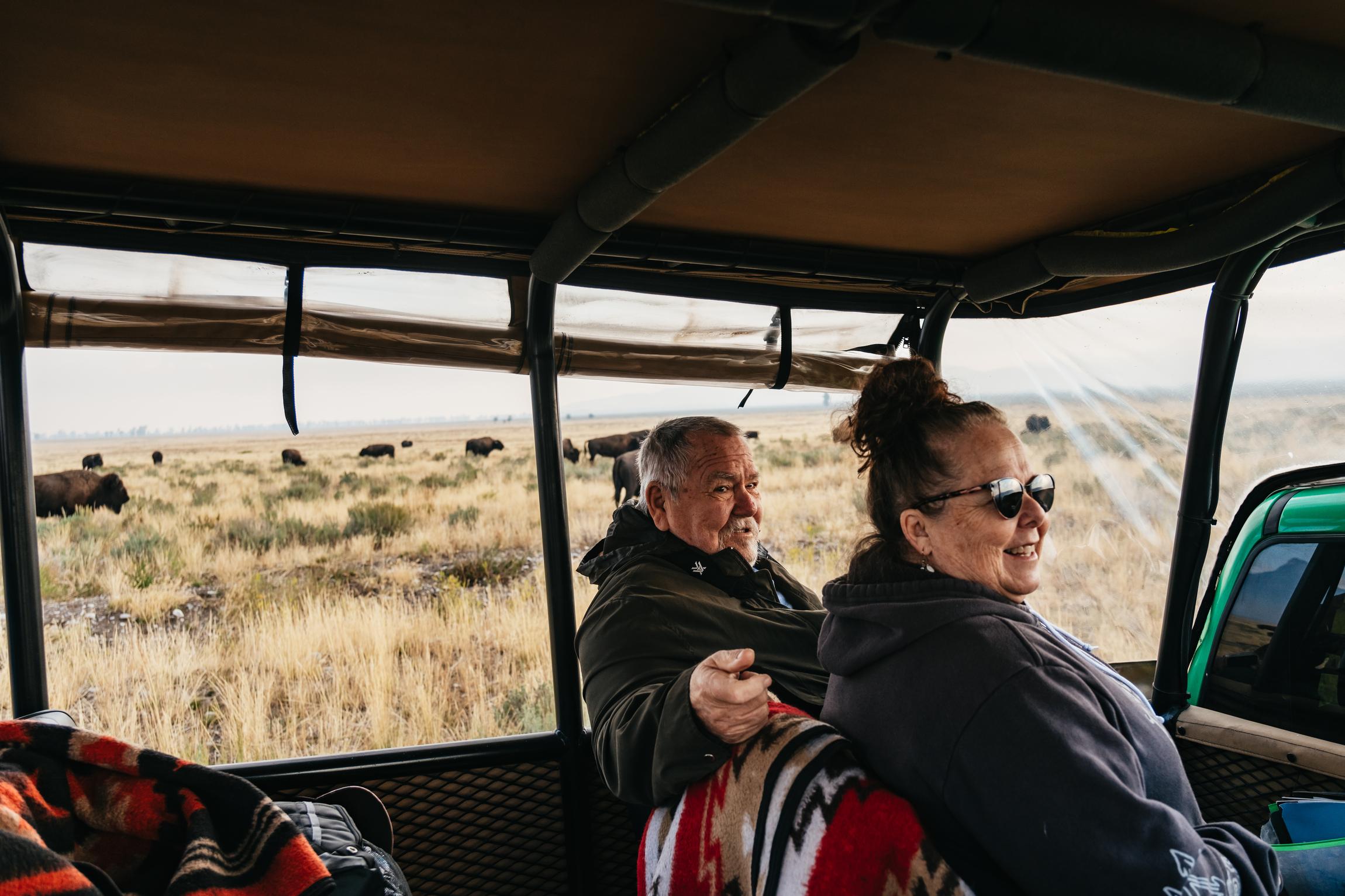
You leave Jackson in the dark, because the park's best arrival window is 06:00–09:00 and the animals keep to it. Your guide has a spotting scope, a thermos, and a route that changes with the previous night's snow. The standard entrance pass costs 35 USD per vehicle and covers seven days; the gates themselves never close, running 00:00–23:59, so the road is yours before the light arrives. First stop is usually a pullout on the flats. You step out onto packed snow, breath fogging, and the scope goes up. Bison first — dark humps steaming, heads swinging to plow feed clear. Then the counting: elk on a distant bench, a coyote crossing a fence line, ravens marking something you cannot yet see. By 08:00 the Teton front catches sun and turns rose, then white. You move down toward the Snake River bottoms, where cottonwoods screen moose browsing willow. Cow moose stand at forty yards, unbothered. Your guide keeps the vehicle between you and them, and explains why. Mid-morning you swing past Mormon Row for the Moulton barns in low light, then toward the elk refuge boundary. A half-day tour returns you to Jackson around midday, warm, with a filled notebook. A full-day grand teton wildlife tour winter runs deeper into the park and adds afternoon light on the same ground, which never looks the same twice. Dress in layers. Bring gloves you can shoot photographs in. The rest is patience.

Frequently asked

Frequently asked questions about grand teton wildlife tour winter tours

Are there grand teton wildlife tour winter options available?

Yes, various guides offer a specialized grand teton wildlife tour winter to see animals on the valley floor.

What is the entrance fee for grand teton wildlife tour winter tickets?

The standard entrance pass is 35 USD per vehicle, valid for 7 days in Grand Teton National Park.

When is the best time for a grand teton wildlife tour winter experience?

The best time to visit is during the 06:00–09:00 arrival window when wildlife is most active.

Can I book a grand teton wildlife tour winter tour for families?

Many operators accommodate families; check specific tour restrictions for your grand teton wildlife tour winter.

What is the address for Grand Teton National Park?

Grand Teton National Park is located at Moose, WY 83012.

Are facilities open during a grand teton wildlife tour winter?

Most visitor centers are closed during the winter, so plan your grand teton wildlife tour winter to be self-sufficient.

Is parking available for grand teton wildlife tour winter visits?

Parking is available at designated pullouts, though some areas may be snow-covered during a grand teton wildlife tour winter.

How cold does it get during a grand teton wildlife tour winter?

Temperatures frequently drop well below freezing; proper winter gear is mandatory for a grand teton wildlife tour winter.

What photography gear is recommended for grand teton wildlife tour winter tours?

A telephoto lens is essential for high-quality wildlife shots during your grand teton wildlife tour winter.